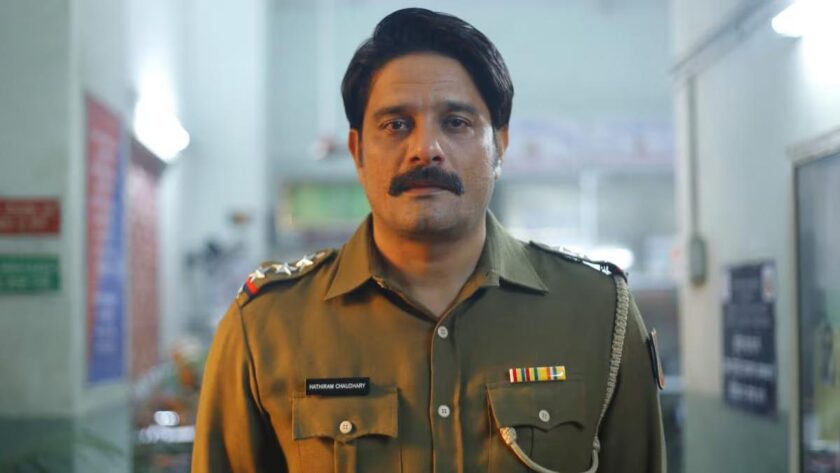

Mumbai: In the high-octane world of Bollywood espionage thrillers, Dhurandhar (2025), directed by Aditya Dhar, stands out as a gripping tale of undercover intrigue, gang warfare, and cross-border counterterrorism. Starring Ranveer Singh in the lead role as Hamza Ali Mazari, the film follows an Indian intelligence operative who infiltrates Karachi’s notorious Lyari underworld, posing as a local criminal to dismantle terrorist networks. Released amid much anticipation, the movie quickly became a box-office juggernaut, crossing ₹350 crore within its first ten days.
But beyond the cinematic flair—replete with searing action sequences, moral dilemmas, and Singh’s transformative performance—what truly captivates audiences is the film’s purported grounding in real events. While Dhar has maintained that Dhurandhar is a fictional narrative drawing from multiple inspirations, whispers and controversies suggest a tapestry woven from India’s shadowy intelligence operations and heroic military exploits. At the heart of this intrigue lies the inspiration behind Singh’s character: a composite of audacious undercover agents who risked everything deep inside enemy territory.
Ranveer Singh’s portrayal of Hamza Ali Mazari is a masterclass in controlled intensity. Hamza is depicted as a deep-cover spy who adopts a false identity to embed himself within Pakistan’s criminal syndicates. He navigates the treacherous alleys of Lyari—a Karachi neighbourhood infamous for gang rivalries, drug trafficking, and militant links. Enduring isolation, betrayal, and brutal violence, Hamza continues to relay crucial intelligence to Indian handlers. Known for his chameleon-like transformations in films such as Padmaavat and Gully Boy, Singh underwent rigorous physical training and learned Pashto and Urdu dialects to lend authenticity to the role. Critics praised his nuanced portrayal of a man torn between duty and humanity, but the deeper intrigue lies in how this fictional operative mirrors the lives of real Indian heroes and the covert wars they fought.
One of the most prominent real-life figures linked to Hamza’s inspiration is Major Mohit Sharma, an Indian Army officer whose extraordinary bravery and undercover prowess have become legendary. Born on January 13, 1978, in Rohtak, Haryana, Sharma grew up in a modest household and was affectionately known as “Chintu” at home and “Mike” among friends. A gifted musician proficient in the guitar, mouth organ, and synthesizer, he was also academically accomplished, graduating from Delhi Public School, Ghaziabad, in 1995. Initially pursuing engineering in Maharashtra, Sharma abandoned the path to follow his patriotic calling, joining the National Defence Academy the same year. He was commissioned into the Indian Army on December 11, 1999, beginning with the 5th Battalion of the Madras Regiment before moving into counter-insurgency operations with the 38th Rashtriya Rifles in Kashmir.
Sharma’s career took a pivotal turn in 2003 when he volunteered for the elite 1 Para (Special Forces), India’s premier commando unit. His first major recognition came in 2002 with the Chief of Army Staff Commendation Card for his service in Kashmir. However, it was his undercover operations that truly set him apart. In 2004, Sharma earned the Sena Medal for a daring infiltration mission in which he disguised himself as a militant named Iftikhar Bhatt to penetrate a Hizbul Mujahideen module. Posing as a terrorist recruit, he gathered vital intelligence and eliminated two high-value targets in close-quarters combat. The operation showcased his tactical brilliance and fearless resolve—traits that closely mirror Hamza’s methodical immersion in Dhurandhar.
Sharma was also known for his innovative training techniques, mentoring young officers in special operations and emphasising psychological warfare and disguise methods that enabled seamless integration into hostile environments.
Tragically, his journey ended on March 21, 2009, during a fierce encounter in the Hafruda forest near Kupwara, Jammu and Kashmir. Leading a search operation based on actionable intelligence, Sharma’s team came under heavy fire. Shot in the chest early in the encounter, he refused evacuation and continued to advance, neutralising four terrorists in hand-to-hand combat while shielding his injured comrades. He later succumbed to his injuries but ensured mission success, saving lives and foiling a major terror plot. For his unparalleled courage, he was posthumously awarded the Ashoka Chakra, India’s highest peacetime gallantry award, on Republic Day in 2010. His mother, Suman Sharma, later recalled that her son had always dreamed of serving the nation, leaving behind a legacy of sacrifice deeply revered within military circles.
The connection to Dhurandhar sparked controversy when Suman Sharma alleged that the film borrowed heavily from her son’s life without due acknowledgment. She approached the Delhi High Court, asserting that the storyline and character arc bore striking similarities to Mohit Sharma’s undercover exploits and final stand. Reports highlighted parallels—both Hamza and Mohit operate under militant aliases, infiltrate enemy networks, and confront betrayal in climactic encounters. Director Aditya Dhar, however, categorically denied the claims, stating that while the film draws from broader themes of military valour, it is not a biopic. “If we wanted to make a film on Major Mohit Sharma, we would have done so with full credit,” Dhar said, reiterating that Dhurandhar is a composite narrative inspired by multiple operations.

Beyond Sharma, the film’s inspirations extend to India’s alleged covert operations in Pakistan, particularly those attributed to the Research and Analysis Wing (R&AW). Following the 2019 Pulwama attack that killed 40 Indian paramilitary personnel, reports surfaced of targeted killings of terrorists on Pakistani soil. Between 2020 and 2024, nearly 20 high-profile militants were assassinated by “unknown gunmen,” including Shahid Latif, mastermind of the 2016 Pathankot attack; Bashir Ahmad Peer, a Hizbul Mujahideen commander; and Paramjit Singh Panjwar, chief of the Khalistan Commando Force.
These operations reportedly involved Indian agents recruiting local criminals, jihadists, or sleeper operatives from countries such as the UAE and Nepal, disguising the killings as internal gang rivalries or ideological infighting. Pakistan accused India of state-sponsored terrorism—claims that gained international attention amid similar allegations in Canada over the 2023 killing of Hardeep Singh Nijjar and in the United States over a foiled plot against Gurpatwant Singh Pannun.
Central to this narrative is Operation Lyari, a real Pakistani military crackdown in Karachi’s Lyari area, where gang wars claimed more than 3,500 lives between 2000 and 2010. Lyari’s criminal ecosystem—deeply intertwined with drug lords and extremist outfits such as Lashkar-e-Taiba and Jaish-e-Mohammed—provided fertile ground for covert infiltrations. In Dhurandhar, Hamza’s immersion in this chaos closely reflects real-world scenarios where intelligence agencies exploit gang rivalries to target terror financiers and handlers.
Other characters further enhance this realism: Sanjay Dutt’s role is reportedly inspired by Pakistani police officer Chaudhry Aslam Khan, known for dismantling powerful gangs; Akshaye Khanna’s character draws from gangster Rehman Dakait; and R. Madhavan’s portrayal echoes National Security Advisor Ajit Doval, renowned for his strategic counterterrorism acumen.
These real-life parallels underscore a significant shift in India’s security posture since the 26/11 Mumbai attacks, emphasising proactive, offensive strategies over purely defensive responses. Defence Minister Rajnath Singh’s 2024 statement about pursuing terrorists “even in their homes” intensified speculation around such covert operations. Yet, concrete evidence remains elusive, rooted largely in intelligence leaks rather than official confirmation—blurring the line between fact and fiction.
In Dhurandhar, Ranveer Singh’s Hamza embodies the spirit of unsung heroes like Major Mohit Sharma and countless unnamed R&AW operatives who function in the shadows. The film not only entertains but also prompts reflection on the immense human cost of espionage. As debates and controversies continue, Dhurandhar stands as a reminder that cinema often becomes the vessel through which the courage of those who cannot speak for themselves is finally acknowledged. Whether directly inspired or loosely drawn, these real tales of infiltration, sacrifice, and geopolitical chess elevate the film beyond spectacle—transforming it into a window into the unseen battles that shape nations.